Crypto-Powered Deposits Versus Traditional Banking: Tracing Real Transaction Flows and Processing Times Across Digital Gaming Platforms
Tina Russell · May 19, 2026
Crypto-Powered Deposits Versus Traditional Banking: Tracing Real Transaction Flows and Processing Times Across Digital Gaming Platforms
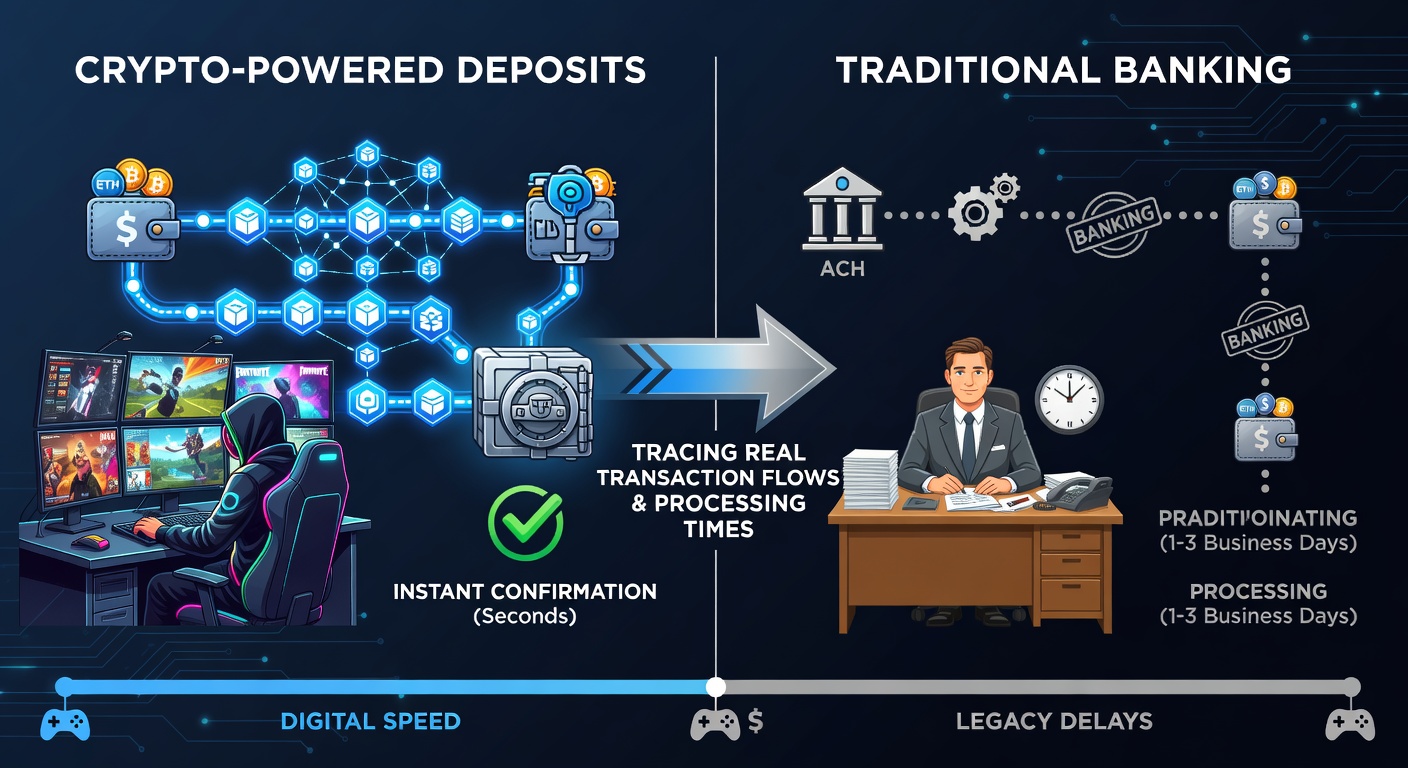
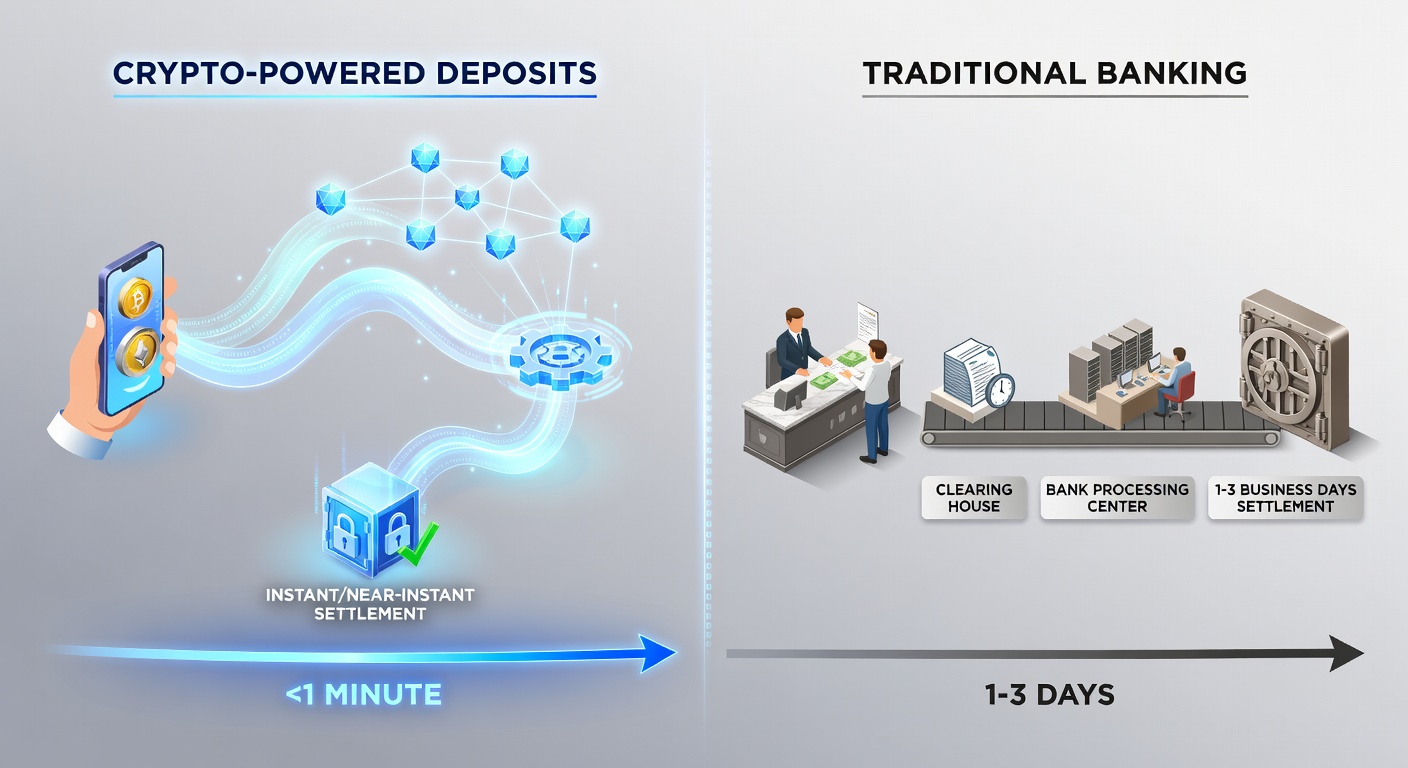
Digital gaming platforms have expanded payment options significantly in recent years, and observers track how funds move from player accounts to operator systems through distinct channels. Crypto deposits route value across distributed ledgers while traditional banking relies on centralized clearing houses, each path carrying its own sequence of verifications and settlement steps. As of May 2026, platforms continue to report measurable differences in confirmation intervals and fee structures when these methods operate side by side. Crypto deposits begin when a player initiates a transfer from a personal wallet to the platform's designated address. The transaction enters the blockchain mempool, where miners or validators include it in the next block after network consensus rules are satisfied. Platforms typically require between one and six confirmations depending on coin volatility and internal policy, a process that often completes within ten to sixty minutes for major networks. Once the required confirmations register, the gaming site credits the balance and the player can access games immediately. Traditional banking deposits follow a longer sequence that starts at the player's financial institution. The platform receives the funds through payment processors that handle card authorizations or bank transfers, after which automated clearing house batches or wire systems reconcile the amounts across multiple intermediaries. These steps usually span one to five business days before full availability, although some card networks authorize an initial hold within seconds while the actual settlement occurs later.Transaction Flow Details in Crypto Systems
Blockchain networks record every transfer in a public ledger that nodes validate continuously, and researchers note that this transparency allows platforms to monitor incoming deposits without manual intervention in most cases. Smart contracts on certain chains can automate release of credits once predefined conditions, such as block height thresholds, are met. Players who use layer-two solutions or faster chains experience even shorter windows because batching and off-chain channels reduce on-chain load.
Traditional Banking Settlement Mechanics
Banking rails depend on established clearing networks that batch transactions at set intervals throughout the day. Processors forward authorization requests to card issuers or banks, which check available balances and apply fraud filters before approving or declining. Subsequent reconciliation moves funds between correspondent banks, a step that introduces additional delays when cross-border elements appear. Operators maintain reserve accounts at these processors to cover the lag between authorization and final settlement.
Processing Time Measurements Across Platforms
Data collected from multiple operators shows crypto deposits averaging under thirty minutes from broadcast to credit in player accounts during 2025 and early 2026 periods. Traditional methods, by contrast, display medians of twenty-four to seventy-two hours when ACH transfers are involved, although same-day wires can shorten that window for premium accounts. Network congestion occasionally extends crypto confirmation beyond one hour, yet these spikes remain shorter than the multi-day holds sometimes applied during bank holidays or weekend processing pauses.
Those who study gaming payment patterns point out that volatility in crypto fees can influence player choices on high-traffic days, while banking fees stay more predictable but include currency conversion markups for international users. Platforms integrate both options to accommodate regional preferences, and transaction logs reveal that crypto volumes have risen steadily without displacing bank methods entirely.
Examples from Operational Records
One major European-facing site documented over 180,000 crypto deposits in the first quarter of 2026, each completing verification in an average of eighteen minutes once the platform enforced two confirmations. The same operator recorded traditional bank transfers averaging forty-one hours, with weekend submissions frequently extending to Monday morning before credits appeared. A separate North American platform reported similar ratios, noting that stablecoin deposits reduced volatility concerns while still delivering the speed advantage over wire services.
Industry reports from the Nevada Gaming Control Board highlight how licensed platforms must log all deposit methods and maintain audit trails that distinguish blockchain timestamps from banking settlement dates. These records help regulators verify that funds reach operators before gameplay begins, regardless of rail used.
Regulatory Context and Reporting Requirements
Authorities in multiple jurisdictions require operators to segregate player funds and reconcile deposits daily. Crypto transactions receive the same scrutiny once converted to fiat equivalents for accounting purposes, and platforms must store wallet addresses alongside transaction hashes. Banking deposits carry additional documentation such as processor statements and batch identifiers. Compliance teams compare these datasets against gaming activity to detect anomalies, a task that benefits from the immutable nature of blockchain records.
Research published by academic centers tracking digital finance indicates that hybrid platforms supporting both rails experience fewer abandoned deposits when crypto options are available, particularly for players outside traditional banking hours. The same studies note that education on wallet security and address verification remains a priority for operators seeking to minimize support tickets related to failed transfers.
Conclusion
Transaction flows and processing times in digital gaming continue to reflect the structural differences between decentralized ledgers and centralized banking networks. Crypto paths emphasize rapid consensus and public verification, whereas traditional banking emphasizes established clearing procedures and intermediary checks. Platforms operating in May 2026 demonstrate that both systems function reliably when integrated with appropriate controls, and records show consistent patterns in how each method moves value from player to operator. Observers tracking these developments can compare confirmation intervals, fee structures, and settlement reliability directly from operational data released by licensed entities and industry associations.