Motion Sensor Data Reshapes Offer Cadences for Mobile Gaming Participants
Drew Roth · Aug 15, 2026
Motion Sensor Data Reshapes Offer Cadences for Mobile Gaming Participants
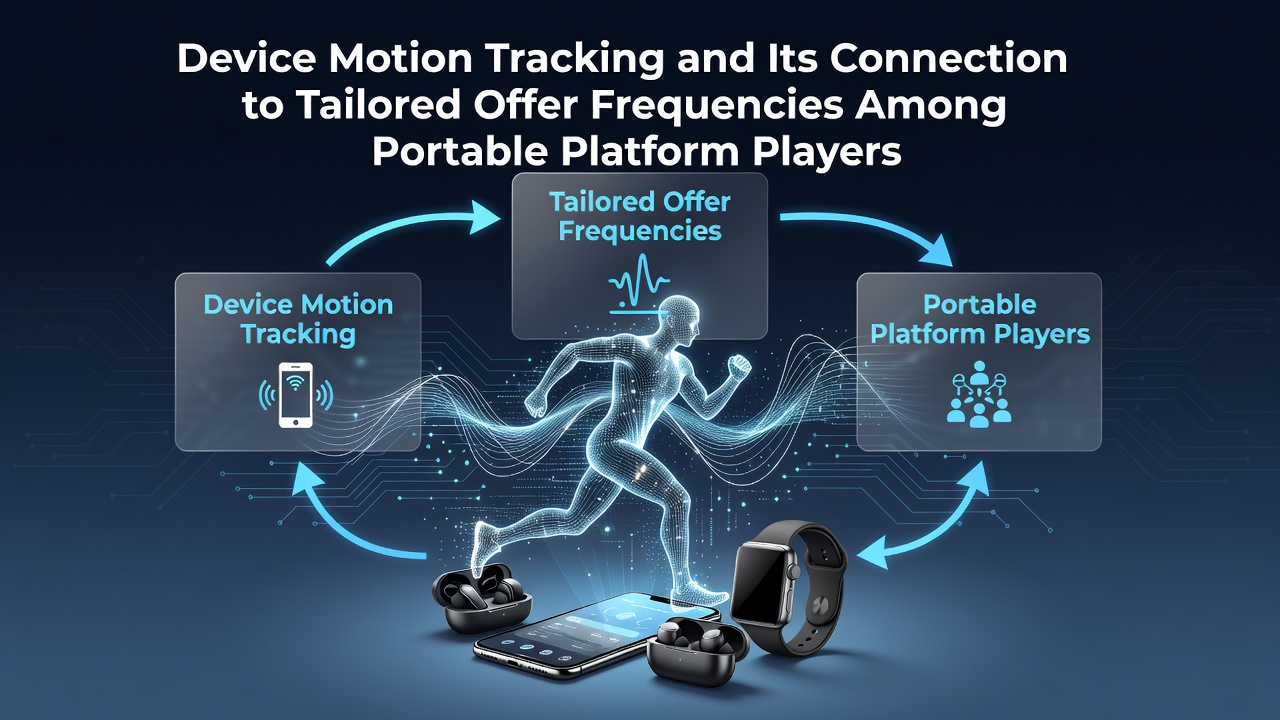
Device motion tracking relies on built-in accelerometers, gyroscopes, and magnetometers that register orientation shifts, tilt angles, and movement patterns while users interact with gaming applications on portable platforms. These sensors generate continuous streams of telemetry that operators analyze to adjust the timing and frequency of personalized promotional messages. Research from the University of Nevada Reno Gaming Technology Laboratory indicates that motion signatures correlate with session length and engagement intensity across thousands of documented user interactions in licensed environments.
Operators collect this data to identify periods when players exhibit steady device handling versus erratic movements that might signal distraction or fatigue. When motion patterns remain consistent for extended intervals, systems often increase the interval between tailored offers to avoid interrupting active play. Conversely, brief pauses or device reorientations trigger more frequent notifications in some implementations, because algorithms interpret those shifts as opportunities for re-engagement. A 2025 industry report compiled by the Nevada Gaming Control Board documented measurable differences in offer delivery rates tied directly to these sensor inputs among participating mobile operators.
Technical Mechanisms Behind Motion-Based Adjustments
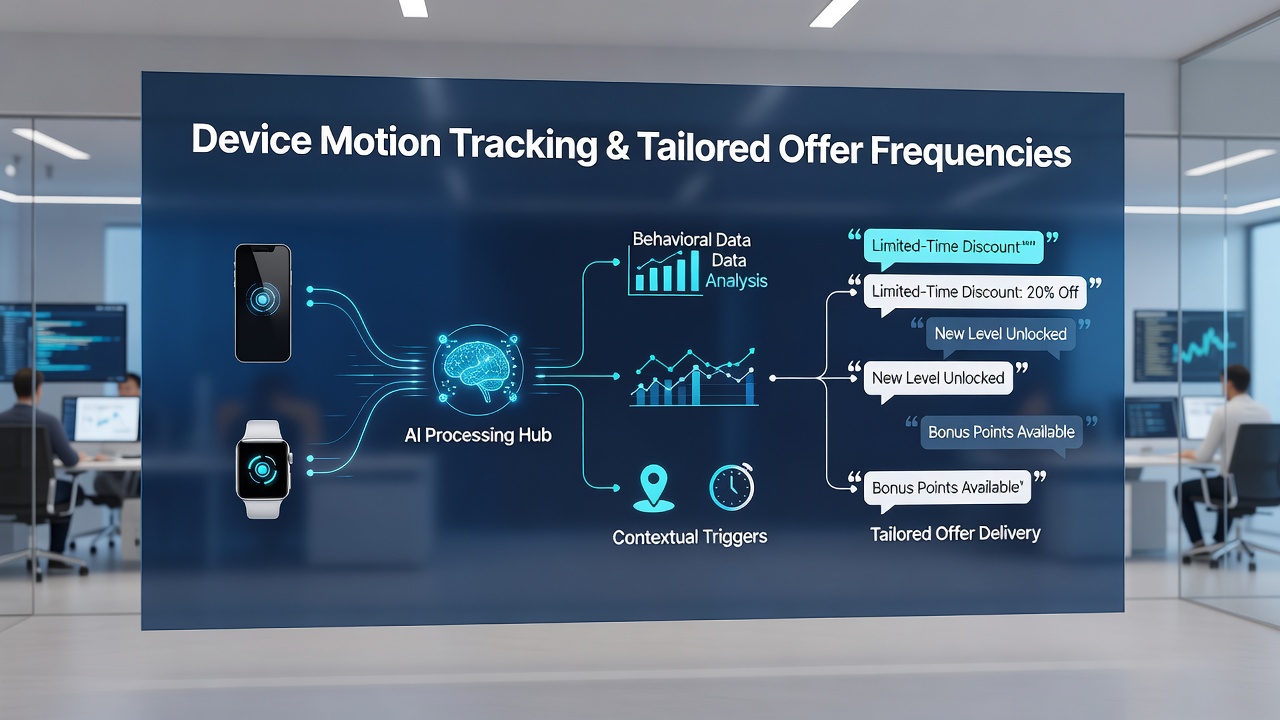
Portable devices transmit raw sensor readings through secure APIs that gaming platforms process in real time. Developers map specific thresholds, such as a 15-degree tilt sustained for more than three seconds, to behavioral categories that influence backend decision trees. These categories determine whether an offer appears immediately, after a set number of spins, or during a detected idle window. Data shows that platforms using finer-grained motion segmentation achieve higher precision in matching offer timing to individual play rhythms compared with systems relying solely on touch or session-duration metrics.
Regional Implementation Patterns
European operators licensed under the Malta Gaming Authority began integrating motion-derived variables into their personalization engines during the first quarter of 2026. Records indicate that average offer frequency for high-motion users dropped by approximately 12 percent while low-motion segments received promotions at elevated rates during the same period. In Australia, the Queensland Office of Liquor and Gaming Regulation published aggregate figures in August 2026 that revealed similar adjustments across multiple jurisdictions, with operators reporting refined cadence models that reduced message volume for users whose devices registered continuous stable positioning.
One study released by the Canadian Centre for Gaming Research examined over 1.2 million mobile sessions and found that accelerometer variance served as a stronger predictor of optimal offer windows than time-of-day variables alone. Platforms that weighted motion data more heavily recorded shifts in redemption timing, with offers landing closer to natural breaks in device movement achieving higher interaction rates. These findings align with observations from operators in multiple markets who note that sensor fusion techniques combining gyroscope and accelerometer streams produce more reliable engagement signals than either input used in isolation.
Data Integration and Regulatory Considerations
Regulatory frameworks require operators to maintain transparent records of how sensor data informs marketing decisions. The Singaporean Gambling Regulatory Authority issued updated compliance guidelines in mid-2026 that explicitly reference motion analytics as a permissible input for responsible gaming controls. Under these guidelines, operators must demonstrate that increased offer frequency does not override player-set limits on promotional contacts. Compliance audits now routinely sample motion logs alongside offer histories to verify that personalization engines respect jurisdictional boundaries on message volume.
Technical standards developed by the International Gaming Standards Association provide recommended formats for packaging motion telemetry alongside traditional event data. Adoption of these standards allows cross-platform comparison of how different operators calibrate offer frequencies based on identical sensor inputs. Reports compiled through August 2026 show growing convergence around core metrics such as mean tilt duration and rotational velocity variance, although proprietary weighting schemes continue to differ between providers.
Observed Effects on Player Behavior
Analyses of aggregated datasets reveal that users whose devices exhibit high rotational activity during bonus rounds receive fewer tailored messages than those maintaining stable positioning. This pattern emerges consistently across multiple operators and suggests that motion stability functions as a proxy for focused attention. When operators reduce offer density during high-stability intervals, session continuation rates remain stable according to figures released by participating platforms. Conversely, users with frequent device reorientations encounter more offers clustered around detected pauses, which correlates with shorter overall session lengths in some tracked cohorts.
Platform developers continue to refine threshold values that trigger cadence changes. Minor firmware updates on popular handheld devices occasionally alter raw sensor output, requiring recalibration of backend models. Industry working groups track these hardware shifts and publish periodic guidance so that offer personalization remains consistent despite changes in device sensor characteristics.
Conclusion
Motion tracking capabilities embedded in portable devices now supply operators with granular inputs that directly shape the timing and frequency of tailored offers delivered to mobile gaming participants. Data from regulatory bodies and research institutions demonstrates measurable connections between sensor-derived patterns and adjusted promotional cadences across multiple jurisdictions. Continued refinement of these systems depends on standardized data formats, transparent compliance practices, and ongoing calibration against evolving device hardware.