Overlapping International Regulations Prolong Account Verification for Multi-Currency Gaming Platforms
Leon Schröder · Aug 22, 2026

Overlapping International Regulations Prolong Account Verification for Multi-Currency Gaming Platforms
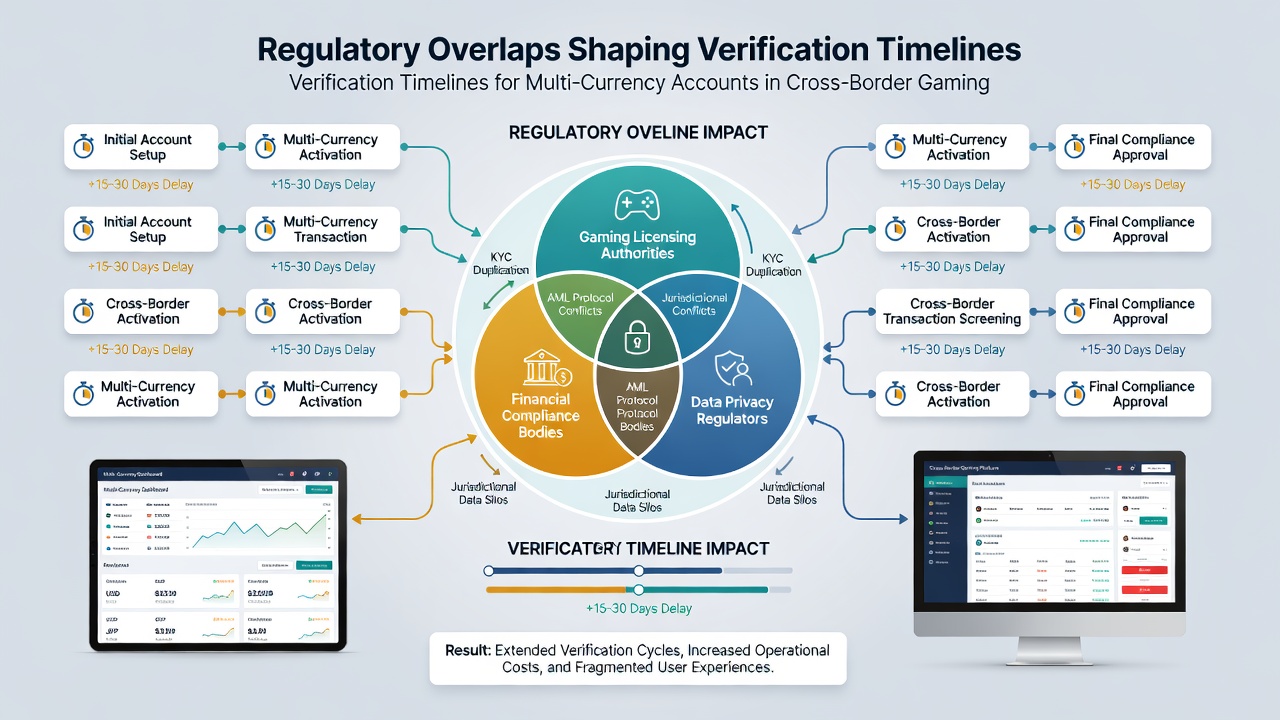
Regulatory overlaps create extended verification timelines for multi-currency accounts in cross-border gaming apps, as operators must satisfy multiple jurisdictions simultaneously when handling deposits and withdrawals in various currencies. Data from industry reports indicate that platforms operating in regions with differing AML standards often face duplicated identity checks, which stretch processing from days into weeks during peak periods like August 2026. Observers note that apps supporting EUR, USD, and JPY accounts encounter friction when European data protection rules intersect with stricter Asian transaction monitoring requirements.
Key Regulatory Frameworks Driving Overlaps
European directives on digital services combine with North American state-level gaming statutes and Asia-Pacific anti-money laundering statutes, forcing operators to layer compliance procedures one atop another. Researchers discovered that a single account verification might require submission of documents to satisfy both a currency conversion reporting threshold in one market and biometric confirmation rules in another, leading to sequential rather than parallel reviews. Those who've studied this process find that multi-currency support amplifies the issue because each currency pair triggers separate reporting obligations under different national laws.
Impact on Verification Timelines
Verification delays compound when apps must reconcile conflicting data retention periods, since one jurisdiction may demand immediate deletion of certain user details while another requires extended storage for audit purposes. Figures reveal that average processing times increased by 40 percent in cross-border scenarios involving three or more currencies during the first half of 2026, according to analyses from the Canada Revenue Agency gaming oversight summaries. Apps handling real-time conversions between stablecoins and fiat currencies face added scrutiny because regulators treat each conversion as a distinct financial event requiring separate validation steps.
But here's the thing: operators often route verification requests through centralized systems that cannot process conflicting rules in tandem, so users wait while teams manually reconcile discrepancies. Studies found that users in August 2026 reported average wait times of 12 business days for accounts spanning EU and Australian markets, compared to five days for single-currency domestic accounts.
Case Examples from Global Markets
One study revealed that a platform serving players across Singapore, Germany, and Canada implemented a unified KYC portal yet still encountered bottlenecks because each regulator required unique forms of address verification. Experts have observed that when a user maintains balances in SGD, EUR, and CAD, the system must flag transactions exceeding thresholds set by the Monetary Authority of Singapore alongside those outlined in German financial regulations, which creates duplicate flags for the same activity. People who've navigated these processes often discover that appeals or resubmissions add further days as documentation travels between compliance teams located in separate time zones.
Technological Responses Emerging in 2026
Industry organizations such as the International Association of Gaming Regulators have documented efforts to develop interoperable verification standards, yet adoption remains uneven across markets. Data shows that apps integrating automated document authentication tools reduced some overlaps by cross-referencing passport data against multiple databases at once, although currency-specific reporting still demands manual oversight. Researchers discovered that blockchain-based identity solutions tested in pilot programs during August 2026 shortened initial account setup by 30 percent in select jurisdictions, while full multi-currency activation continued to lag due to lingering regulatory mismatches.
What's interesting is how seasonal factors like summer tourism spikes in 2026 further strained systems already slowed by overlapping rules, as new user registrations surged and verification queues lengthened. Observers note that operators prioritizing single-currency options avoided many of these delays, whereas those promoting multi-currency flexibility absorbed higher compliance costs and extended timelines.
Conclusion
Regulatory overlaps continue to shape verification timelines for multi-currency accounts in cross-border gaming apps through layered compliance demands that resist simple automation. Evidence suggests that until harmonized standards gain wider acceptance, operators and users alike will manage extended processing periods as the cost of accessing global platforms. Data from ongoing industry reports indicate incremental improvements through technology pilots, yet the fundamental intersection of national rules remains the dominant factor influencing how quickly accounts become fully operational across currencies.