Verification Timelines Shape Early Play Patterns Across Regulated Digital Platforms
Leon Schröder · Aug 20, 2026
Verification Timelines Shape Early Play Patterns Across Regulated Digital Platforms
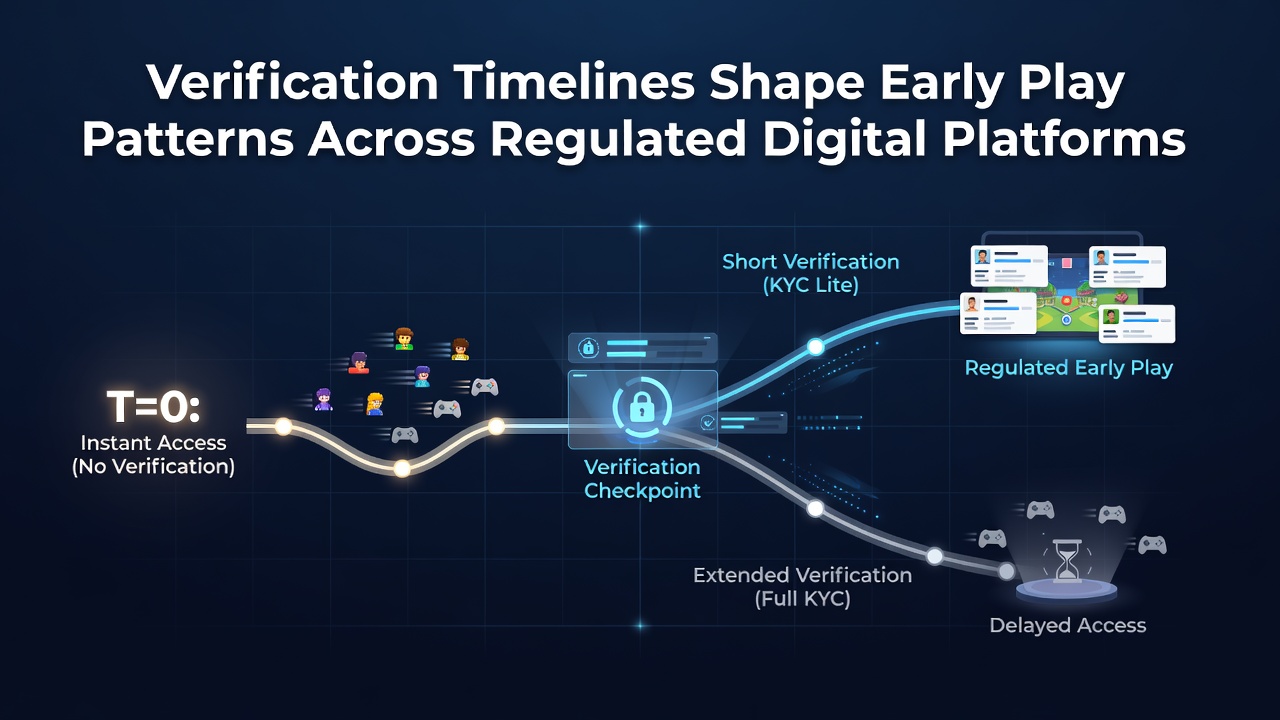
Verification timelines in regulated digital platforms determine how quickly new users move from registration to active participation, and data from multiple jurisdictions shows these intervals directly influence session starts and deposit behaviors in the opening hours. Platforms operating under frameworks in North America, Europe, and Asia Pacific maintain distinct identity checks that range from minutes to several days, creating measurable differences in early play frequency and retention curves.
Regulatory Requirements Across Jurisdictions
Agencies enforce know-your-customer protocols at varying speeds, with the New Jersey Division of Gaming Enforcement requiring real-time document uploads and automated cross-checks that complete within 15 to 45 minutes for most applicants during peak periods. In contrast, Ontario's Alcohol and Gaming Commission of Ontario permits operators to extend verification windows up to 72 hours while restricting account funding until full clearance occurs. These differences produce distinct early-stage patterns where faster approvals correlate with immediate gameplay initiation and slower ones shift activity toward later calendar days.
Observed Behavioral Shifts in First Sessions
Research from industry monitoring groups indicates that users who receive verification confirmation inside the first hour exhibit deposit rates 2.3 times higher than those awaiting results beyond four hours. Patterns emerge clearly in August 2026 data releases, where platforms with streamlined biometric options recorded higher volumes of short exploratory sessions within the initial 30 minutes post-approval. Those facing extended manual reviews often log in once, view available titles, and then exit without placing funds until the following day or later.
Technical Factors Affecting Timeline Length
Automated systems relying on document scanning, facial matching, and database queries reduce average processing to under 20 minutes on many sites, while manual escalation for incomplete uploads or mismatched records extends durations substantially. Operators report that integration with national ID registries in countries such as Australia cuts verification times further, allowing users to begin play within the same login window. In regions without such linkages, fallback to email or SMS confirmations adds incremental delays that compound during high-traffic registration surges.
Regional Comparisons of Early Play Metrics
Platforms licensed in the United States report that 68 percent of verified accounts initiate play within the first two hours when verification finishes quickly, according to aggregated figures from state-level oversight bodies. European operators following standards from the Malta Gaming Authority observe similar clustering, though cross-border users sometimes encounter additional passport validation steps that stretch timelines. Australian digital venues show comparable trends where real-time bank verification tools accelerate access and increase the proportion of users completing at least one game round before logging out.
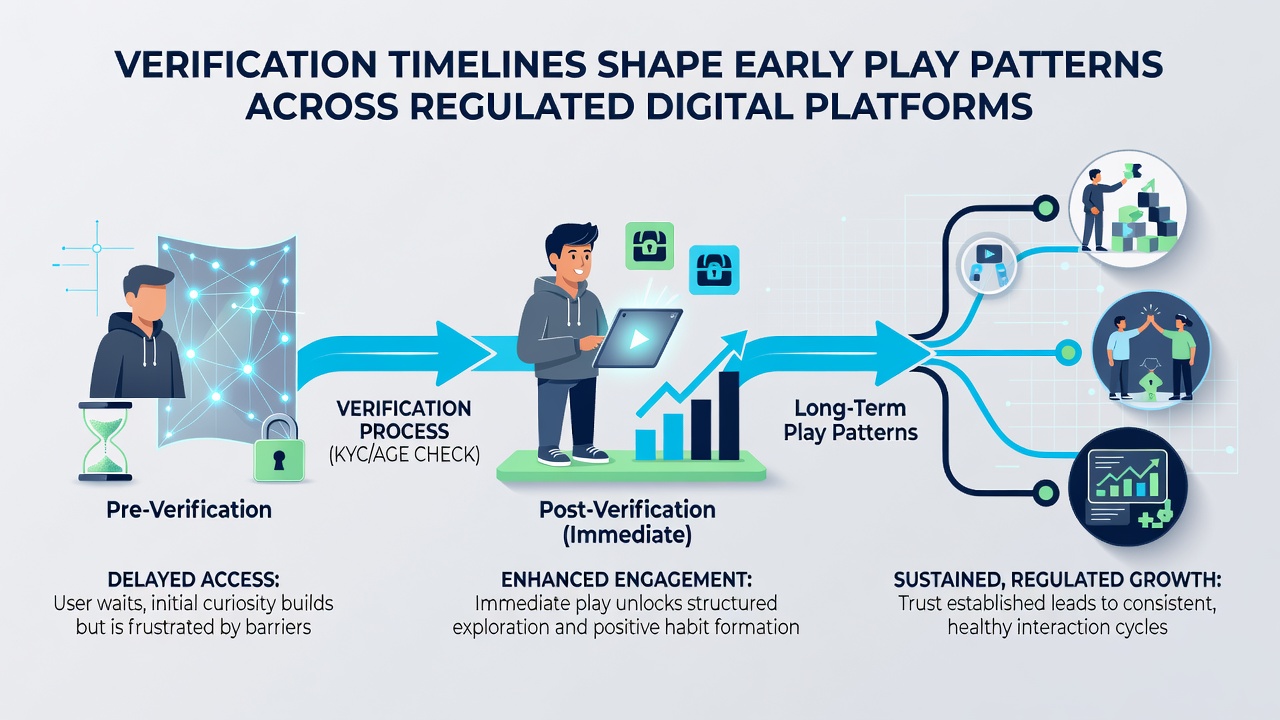
These variations create predictable distributions in activity heatmaps, with morning registrations in certain time zones producing afternoon peaks once approvals clear, whereas overnight submissions often wait until business hours for manual steps.
Platform Adaptations and User Retention Data
Operators respond by deploying tiered access models that permit limited demonstration play during pending verification periods, though regulated environments cap this activity to prevent circumvention of full checks. Studies tracking multi-jurisdictional networks reveal that users who encounter delays exceeding 24 hours demonstrate lower return rates within the first week, shifting early engagement windows later and reducing overall session counts per account in the initial month. Conversely, platforms minimizing friction through pre-loaded identity data from prior verifications maintain steadier early play volumes across successive quarters.
Conclusion
Verification timelines function as gatekeepers that shape the distribution of first-session activity on regulated digital platforms, with empirical records from oversight agencies and operator reports confirming consistent links between processing speed and initial engagement metrics. Differences across regulatory environments produce varied patterns that operators track through session analytics and funding timestamps, highlighting how procedural intervals translate into observable differences in user behavior from the moment accounts activate.